

From 2009 through 2021, I saw Ben Shapiro as a friend and close colleague.
Born 14 days apart in January 1984, he’s always had a two-week head start on me.
And I’m not talking about someone with whom I just exchanged emails and retweets, though there was plenty of that for years. We both lived in Los Angeles in the 2010s so I saw him face-to-face at events. I edited some of his articles. We argued about movies. (His tastes were to blockbusters while I’d worked at the arthouse movie theatre in college.)
We had phone calls offering each other career guidance. I got him into speaker events during my years working at the David Horowitz Freedom Center, and he invited me and my wife to see a performance of a wonderful musical he and his father had written together. I’ll always remember him singing along in the front row.
At the Freedom Center in 2013, Ben and Jeremy Boreing were going to launch Truth Revolt, the successor to NewsReal Blog which I had edited before David got mad at me and shut it down in 2011 before illegally cutting my salary as punishment. Truth Revolt’s collapse when David also got mad at Ben and Jeremy would ultimately lead to the Daily Wire. I had a frank phone call with Ben warning him about what an abusive monster David was to work for — he needed to know about the spinning buzzsaw with a goatee he was diving into headfirst. It was traumatic working for a boss as cruel as David was. I’m still messed up over it.
I warned Ben how David didn’t really believe in anything, that he was just doing what he did to try and pay down his trophy wife’s K2 of credit card bills. With David constantly flipping his positions like a hockey puck across the ice to whatever targets he felt like could inspire the most donations, it made him impossible to work for since he would constantly be changing his mind about what the strategy would be.
One time I’ll never forget working with David — a story I’ve told regularly over the years — was one morning when he told me to write a story going after some leftist professor group he despised. I id and then send it to him over email for his approval before publishing. He told me that I was coming in a little too harsh and that I should instead do it more straight. So I revised into more of a traditional news article rather than a punchy blog post. He called me back in the afternoon and started rewriting it with me over the phone to shape the article into what he really wanted. And as he did so I pointed out to him, “David, wait a second, you’re now wanting this to be way more intense than I originally had it before you told me to tone it down. So what happened? Why are we shifting strategie nows?”
And David had not even realized it. “Oh,” he said. “I must have been in a different mood then.”
I came to understand that Ben ended up receiving this “different mood” from David even worse than I did.
I advocated for Ben and defended him online. We both contributed to Breitbart while Andrew was still alive. I promoted his books and podcasts. I contributed articles to The Daily Wire. They hired me to write a dozen short scripts for them. I regularly proclaimed that Ben was our generation’s William F. Buckley, Jr. I argued that he would be the one who would lead the conservative movement next.
[Update, August 13, 1:23 AM: One important thing too that I forgot to mention upon first publishing, part of the reason why Ben was positioned to launch Truth Revolt is because in my final months at the Freedom Center before I chose to quit and join Pajamas Media, the late Peter Collier asked me to recommend the initial group of Shillman Journalism Fellows. Ben’s name was on the top of the list and all of my recommendations received lucrative fellowships.]
Ben was the one among us who was a genuine, certified genius. He had skipped multiple grades, appeared on Larry King as a 12-year-old playing the theme from “Schindler’s List” on his violin, and attended Harvard.

And by the time he and I became friends in 2009, he’d already published three books, none of which had really hit big yet. I took particular exception to his 2005 book Porn Generation: How Social Liberalism Is Corrupting Our Future in which he argued for obscenity prosecutions against pornographers.
However, as I came to know Ben, it soon became clear that he was less interested in being our Buckley and more interested in filling his bank account by being our Rush Limbaugh.
My fondest memories of Ben from the Obama era were watching and supporting the rise of his radio career.
I remember Ben emailing me when I was an editor at FrontPageMag, asking if I could help him with finding sponsors for his first regular radio show, a weekend program in Florida. Later he would shift to working as an early morning co-host in Los Angeles where he regularly debated with a liberal co-host. His program which he co-hosted with others ran from 6 AM to 9 AM and I’d usually rise at the start of it as the sun emerged over the San Fernando Valley, not just so that I could hear the show and begin the day’s list post editing, but so that I could slip Ben feedback and tips in real time. I was probably in touch with Ben during this recording here:
Over instant messenger, I’d send him links and suggest arguments. I’d comment to him about what the other people on the show were saying as they were said it, usually in my George Carlin vernacular. The same sort of double-barreled BS-busting you see me doing on Substack Notes is the sort of analysis that I’ve provided Ben and other players in right-wing media since I made the mistake of going to work for David in 2009 and then moving in 2010 to LA to work out of the Freedom Center’s Sherman Oaks headquarters. Except they get it uncensored.
My preferred role has always been the wizard advising a king. A Merlin to an Arthur. A John Dee to a Queen Elizabeth. A Gandalf to the Fellowship. That’s been my archetype that I chose in third grade on the playground and I haven’t let go of it since. Trump has infamously said he’s largely the same person in temperament that he was in elementary school and I suppose that I am too. Aren’t we all to a degree?
And one of the key things that I advised Ben about was how to understand the topic of medicinal marijuana, which at the time was finally starting to breakthrough in California. Ben knew that I relied on weed to cope with what was then mis-diagnosed as Bipolar-II and the chronic nausea which I’d struggled with for years in response to a medication. (Even today with the help of the weed, eating is a chore and a struggle, not a joy.) I told him all about how weed was key in helping me function and that the many varieites of it could do different things. I explained that one strain might raise energy while another might offer calming. I told him about how some strains could be too strong and that dosage was important. This analysis that he seemed to appreciate during his shows every day was all weed-fueled.
Realizing just how high-strung he was all the time, I urged him to try it at some point and offered to smoke him out but he insisted that “my body is a temple” and refused. I respected that, of course.
Over the years, as he became more famous and I became less useful to him, Ben and I communicated less frequently. I accepted that we were really more just colleagues than real friends. I’ve come to learn how a lot of people just pretend to be friends when really they’re just a work colleague. And I accepted that was just Ben. I didn’t want to bother him if there wasn’t something really important. And there was also the reality that we had drifted further apart ideologically.
While Ben and I both took the #NeverTrump position in 2016, Ben softened to Trump, likely out of commercial necessity for The Daily Wire. In 2020, he endorsed Trump and has remained a steadfast defender, while I now regularly refer to our mentally-collapsing Commander-in-Chief as a fascist and his minion Stephen Miller — another of David’s proteges — as a bigoted builder of concentration camps.
I’ve refrained from speaking out against things Ben has said and done since he decided to Marley’s Ghost me in the fall of 2021 when I most needed the support of my friends.
I’ve since found out that this is just something Ben is known to do.
Piers Morgan recently called him out for this practice of just cutting off communication with friends without explanation. I’ve also since learned this is the way a lot of people with narcissistic personality disorders operate as a way to protect their egos.
It is easier to cut someone out of your life than to honestly consider how you failed them as a friend or family member.
I’ve had better things to do with my time than publicly disagree with Ben or call him out for some of the stupid shit he can’t resist saying. And I still regarded him as doing more good than bad. He was still an important “warrior for Israel” and I still agreed with him more than not on what mattered most. While Ben and I always disagreed on “the social issues” — I supported gay marriage — we tended to be in sync on foreign policy and certainly agreed on our shared mentor David’s spiked analysis of the depraved Far Left.
However, at this point, after his podcast from August 5 embeded above, I’m done.
Ben’s just another bullshit salesman now to me and I’m going to start calling him out more regularly now.
Below is a transcription of his diatribe from August 5 advocacting that the government should criminalize weed because the smell annoys him and thus people like me should not have our medicine available to us and in fact should be imprisoned.
I have inserted comments throughout — this is what we in the good ole blogosphere 20 years ago used to refer to as a “fisking” — and a scientific debunking of his misinformation will follow afterward.

Yes, it will be the best, here we go:
Listen, I will admit when I was in college, I was a narc. I was a narc because you know what? I don’t like when people smoke pot. So, if you were out in public smoking pot, like in large groups, maybe when I was like 16 at UCLA, I might have called the campus, but they didn’t do anything. No harm, no foul.
Ben starts the show bragging about being a 16-year-old college student calling to try and bust his adult peers for smoking weed. He wants to deny that his action could have genuinely harmed the students involved.
The truth is that Ben’s experiences resulting from his parents collosal mistakes in choosing to skip him multiple grades and pushing him to start college early harmed him psychologically, isolating him even further than his extreme intelligence already did. Ben did not have the opportunity growing up to learn how to have healthy interpersonal relationships like the rest of us. He was too busy studying and practicing his violin. He was too busy being trained for a life dedicated to the addictions of workaholism and careerism—the twin sour fruits that spring from narcissism’s poisonous, rotting tree.
But here’s the thing. I was right about pot. According to a new federal report on drug use, America’s consumption of weed is at an all-time high. Its side effects are at an all-time high as well. I’ve said it my entire life. I’ll say it over and over again. Weed is terrible for you and also for your life.
Not just because it makes you a lazy loser, but also because it’s actually bad for your brain. Let’s take a look at the stats. Some of us have thought that pot is gross for literally ever. For literally ever.
“Lazy loser?” This lazy loser was waking up at 6 AM to give you notes on your show, Ben.
Bad for my brain? Both my psychiatrist and my therapist encourage me to keeping using it. None of my doctors have ever told me to stop.
Ben’s area of professional expertise from his years at Harvard is contract law yet here he is talking science and medicine.
At least he didn’t have to bring up again that his wife’s a doctor to remind everyone he totally knows what he’s talking about on these topics.
It’s been so weird over the years and sometimes embarrassing watching Ben talk like he thinks medical knowledge is a sexually transmitted disease. It’s always annoying when Ben gets these regular outbreaks of thinking he knows more than he does about topics he hasn’t studied in depth at all.
I will admit back in my college days, I was a little bit of a narc. Back in my college days, I remember that there was 4/20 day on the lawn at Kerkchoff at UCLA and it was celebrated in the school newspaper. And so somebody may or may not have called campus police to break up a giant bout of pot smoking on the lawn at at Kerkchoff because, gross. And also laws were on the books. Of course, the campus police did nothing. But put that all aside, no harm, no foul. No one got arrested. It was all fine.
In any case, was pot a great idea here in the United States of America? The answer is nope. It was completely crappy idea. Truly terrible idea. Everyone, well done. And thanks for all the propaganda about how marijuana is going to solve your back problem. That’s awesome.
It’s worth interjecting here that Trump — who Ben voted for twice and advocates for daily — is the most pro-marijuana president in American history. He is the one who moved marijuana from a Schedule I to a Schedule III classification. This is something Bill Clinton should have done. Barack Obama should have done it. Joe Biden should have. Trump finally did it because he could get away with it when it was finally popular enough and he probably has some business interests in it somewhere too.
Yet, Ben can’t mention this at all. The truth doesn’t matter to him. It ruins his whole argument to acknowledge that Trump did this.
Okay, let’s be real about marijuana. Marijuana is poisoning brains at an extraordinary rate.
A brand new study demonstrates that millions of people aged 12 plus have been using marijuana for 20 plus over the past 30 days. We are up to 21.5 million Americans aged 12 plus. We’re talking about kids very often who are using pot on an almost daily basis. That is now more than cigarettes and more than alcohol.
That’s not good. That is quite bad. So Charles Fain Lehman over at The Free Press has a piece on this and he points out the National Survey on Drug Use and Health estimated that marijuana eclipsed alcohol a few years back.
Back in April, I wrote about this news that daily marijuana users were now higher than daily alcohol drinkers. I included it as the lead in this list describing what I had learned over the last quarter century of cannabis use:
As Ben and I took opposite position on Trump, we also take opposite positions on daily weed use.
I take the position that all adults in America should be consuming daily.
Everyone.
Ben’s programs would be way better if he started smoking some Kosher Kush during the show. He might actually be funny for once intentionally instead of by accident.
Yes, we’re taking the maximalist position here. This would be a much better country if everyone was just a little bit stoned. This would be a much kinder world if everyone dropped alcohol and caffeine and switched to cannabis instead.
Everyone knows that I’m right whether they want to admit it or not. I’m just the one apparently now dumb enough to say it aloud since smoking all this weed has rotted my brain and made me stupid like Ben says.
In 2025, daily users accounted for 80% of marijuana consumption compared to 90% of cigarette smoking, but less than half of all alcohol consumptions. When we say marijuana is less bad than alcohol, well, I mean, most people were not, you know, downing, guzzling the beer every single day. The vast majority of people who are using marijuana were using it regularly.
Ben, we inhale this stuff regularly for the same reason people need to take any prescription each day. When you’re sick, you need to keep taking the medicine or else the symptoms return.
Seventy-four percent of Americans now live in a state with recreational access to pot, 79% of Americans live in a county with at least one dispensary. Eighteen million people — that’s one-third of all users aged 18 and up — have reported symptoms of cannabis-use disorder. Cannabis-use disorder, by the way, it robs you of your ability to think. It robs you of your initiative. Loss of control.
Time spent consuming, obtaining, or recovering from cannabis use is real. You neglect your primary obligations at work, school, at home. You scale back your social or recreational activities.
Because Ben has never smoked weed — and he clearly has not — he does not know the obvious fact that weed makes social and recreational activities better. When you go to a rock concert, people are smoking weed because it makes the music more exciting and vivid.
My ex-wife and I had Disney Land passes for a few years and would often go multiple times a month in ritualistic fashion, arriving first thing in the morning at opening and then hitting a regular cycle of the key rides. We did it so much that we figured out the exact place to swallow our “yak capsules” about 15 minutes before arriving so that they would begin to hit just as we were stepping onto Space Mountain and then they would peak at a Perfect Glory for Pirates of the Caribbean.
Friends, you have not ridden Pirates of the Caribbean until you’ve done it high as fuck. Yo ho, yo ho, a stoner’s life for me!
And again, you have to work harder to get to the same place. Americans, by the way, aren’t just using pot. They are using more of it and it is significantly more potent than it ever was.
The active concentration of THC, which is the main psychoactive component in pot, has quadrupled in traditional plant matter and skyrocketed in processed products as well since like the ‘90s.
And high potency THC is what is driving a lot of this. It creates significantly more problems with perception and sense of time and short-term memory.
This red herring swimming up the the rising potency of marijuana over the last 20 years is a fish we’ll dissect below.
It can induce severe anxiety, panic attacks, paranoia, or acute psychosis. And again, because so many young Americans have been using it, it just makes you dumb.
Remember all of those PSAs back in the ‘80s and ‘90s saying the drugs make you stupid and everyone was “no no.” Yes, yes, yes. Long-term use starting in adolescence can permanently lower your IQ by up to eight points. That is, like, half a standard deviation because it disrupts your brain development. And, of course, in adults it can also create midlife brain fog, lower motivation, and learning difficulties. So all of this rots your brain and skews your brain development.
There are high correlations with reporting involuntary job loss, right? Getting fired, higher likelihood of missed work days. It’ll bleed over into all these elements of your life.
So, our government decided to stop policing things it should have policed and to start intervening in things where it shouldn’t intervene. Great job, government. You’ve done amazing. You’ve incentivized bad behavior on a wide variety of fronts and then promised people literally the world and it has not worked out extraordinarily well.
Isn’t this weird how Ben proclaims “Great job, government” instead of “Great job, Trump?”
It’s as though Ben is just pretending that the Republican Party he’s devoted his life to promoting hasn’t now become the most pro-marijuana and pro-psychedelics political party in American history.
Normally when transcribing a podcaster, one would skip the advertisement in the middle. However, I’m not going to do that here. In the middle of the monologue, the video shifts to Ben doing an advertisement for one of his podcast’s sponsors.
And what is it he’s selling in the middle of a monologue against marijuana, one of the best sleep aids humanity has ever known?
He’s hawking bed sheets.
Fucking bed sheets.
And it’s the same goddamn brand that I remember him pitching on the radio 13 years ago.
Boll & Branch!
When we’re younger, you can sleep just about anywhere. Couch, airport, questionable motel, doesn’t really matter too much.
Well, now if it’s too hot, I’m awake. If the sheets feel heavy, I’m awake. If I’m awake, then everyone around the house is going to know about it the next day. Also at work. So, this is why I rely heavily on Boll & Branch. So, I’m moving all about the house right now. We have a brand newborn. That means the baby’s up all night and I’m moving around the house. But, you know what I’m bringing with me so I get my sleep? My Boll & Branch product. Boll & Branch doesn’t rely on gimmicky cooling technology or chemical treatments. Their sheets are made from 100% organic cotton and woven specifically for airflow, so they stay breathable throughout the night. Somehow, they just keep getting softer every single time you wash them. It’s one of those upgrades you don’t fully appreciate until you’ve lived with it for a while, and then you wonder why exactly you waited for so long. Sleep cooler this summer with Boll & Branch. Get 15% off your first order, plus free shipping at bollandbranch.com/shapiro with code Shapiro. That’s Boll & Branch. BOLLANDBRANCH.com/ Shapiro code Shapiro to unlock 15% off.
Again, that’s bollandbranch.com/shapiro to get the special deal.
There you go, Ben. Out of the kindness of my heart, I’m sharing one of your advertisements for free on our humble little Substack. I’m sure they’re very comfortable sheets:
After the ad, Ben really flew off the rails in crazy train mode and crashed into an unapologetic police state:
The best policy prescription to get Americans to stop using weed is to make it illegal. Again, that would be the actual best prescription with regard to pot. Again, the idea that medical dispensaries are predominantly selling to people because they have medical problems, that was always a ruse to just increase the dissemination of of pot.
And it turns out that when there’s a market, then people are going to try and develop more potent drugs for market. This is where, again, I’m a conservative. I’m not a libertarian.
“Heirs of a Cold War, that's what we've become / Inheriting troubles, I'm mentally numb / Crazy, I just cannot bear / I'm living with something that just isn't fair” - Ozzy Osbourne
William F. Buckley, Jr., the founder of the modern conservative movement, was both a libertarian and a conservative — as we all should be — and he advocated for the legalization of weed, arguing against theocratic extremists like Ben:
National Review called for weed legalization back in 1996 when Ben and I were 12. Yet Ben in 2026 proclaims that he, the true conservative, says weed should be criminalized.
When it comes to drugs, this is a perfect example of how the market will make things more efficient and cheaper. And that is what has happened with marijuana.
There’s more THC and it is less expensive. Also, it turns out it’s really bad for you.
But again, I am a conservative, so I believe that your local community should be able to ban pot dispensaries.
And frankly, I think that your local community probably should. The notion that pot dispensaries and the takeover of our cities by marijuana has somehow been a gigantic boon.
All the things that were promised do not materialize. If you’ve been in Denver recently, I got to say Denver is a terrible place to be. You walk around and the waft of of pot is just everywhere. And listen, I don’t think that I should have to walk around with my children and my children are just walking by people smoking pot out in the open. I’m not a fan of this.
Isn’t it just bizarre to go leap from “I don’t like smelling this substance in public” to “we should lock up anyone who grows it?”
It’s almost so bizarre it seems like an act!
It has those externalities, but put aside the externalities. Again, you do not have a core right to consume hallucinogenic drugs in the United States, nor did you ever. This was never a core right.
You know, this does go to what rights are for. Now, again, I’m a fan of rights, but the kind of right that I’m a fan of is an immunity from the government because the government should not have enough power to do X.
On the subject of your imaginary rights, let’s defer to St. George Carlin:
All of our rights are fictional. Just like Ben’s public persona.
I love my “right to freedom of speech” and “right to freedom of religion” but these are just human-made abstractions in our heads, not something objective and real you can measure in a lab.
Ben knows this. He owns shelves of philosophy books.
But I think that the government should have the power to restrict substances in the chain of commerce that are bad for the body politic. I do not think that is a perfectly libertarian conception.
I’m sorry, let’s just stop for a moment and emphasize that: “restrict substances in the chain of commerce that are bad for the body politic.” Seriously?
If that sounds like Ben being a parody of himself then it’s because he is at this point.
I don’t think that heroin should be legalized, for example, because you don’t have a right to heroin. You also do not have a right to pot.
So again, is there a great way to cut down on pot usage? I mean, the answer is the best way would be to make it illegal again to go after dealers to cut down on the supply of pot across the country.
The argument, by the way, that that’s been used as for as long as I’ve been alive is that prohibition never works. That people just use it more and more and more. That wasn’t true during prohibition and it’s not true now.
This seems like a good excuse to drop in the opening theme to “Boardwalk Empire” since Ben is so nostalgic for the 1920s:
It turns out that when government makes something illegal, yes, a black market is created, but the amount that is distributed via the black market is far lower than it otherwise would be when you’ve got, for example, a liquor shop on every corner. It turns out that during prohibition overall, it did work in the sense that Americans drank less overall.
They can make the argument that alcohol shouldn’t have been banned by the federal government. In retrospect, people tend to think that that’s true.
Ben, you know very well who Meyer Lansky was. He was the most powerful Jew of the 20th century, the financial genius behind the mafia and its most successful operator. His depiction in Boardwalk Empire was wonderful:
The lesson most Americans have learned from Prohibtion is not that it helped reduce drinking, but that it gave birth to the mafia. Out of bootlegging, came the infrastrucure of organized crime.
Black markets empower criminal gangs. From his time running booze in the 1920s, Lansky built a black market empire across American and into the Caribbean.
Here’s an in-depth essay that Sally and I wrote about him a few years back:

But I think in retrospect, we can also see that that the addictive nature of pot, particularly for teenagers who are getting a hold of pot when they’re 13, 14 years old and then poisoning themselves, that that’s been quite terrible.
And by the way, that’s leaving aside any of the additives that sometimes drug pushers will will add to the pot. An inordinate number of fentanyl overdoses have been from the lacing of marijuana with things like fentanyl and it kills the kid.
And here in his conclusion, Ben accidentally makes one of the most obvious arguments for why dispensaries are so beneficial and necessary. When people can go and buy their marijuana at a dispensary and it’s regulated like any other produt, then it never gets laced with Fentanyl.
Interesting that Ben should mention Fentanyl — a legal drug — in this context, isn’t it?
How many deaths do Fentanyl and other syntheic opioids cause each year? In 2024 they accounted for 60% — more than 48,000 people.
How many people died from a marijuana overdose in 2024?
Let’s ask the Center for Disease Control:
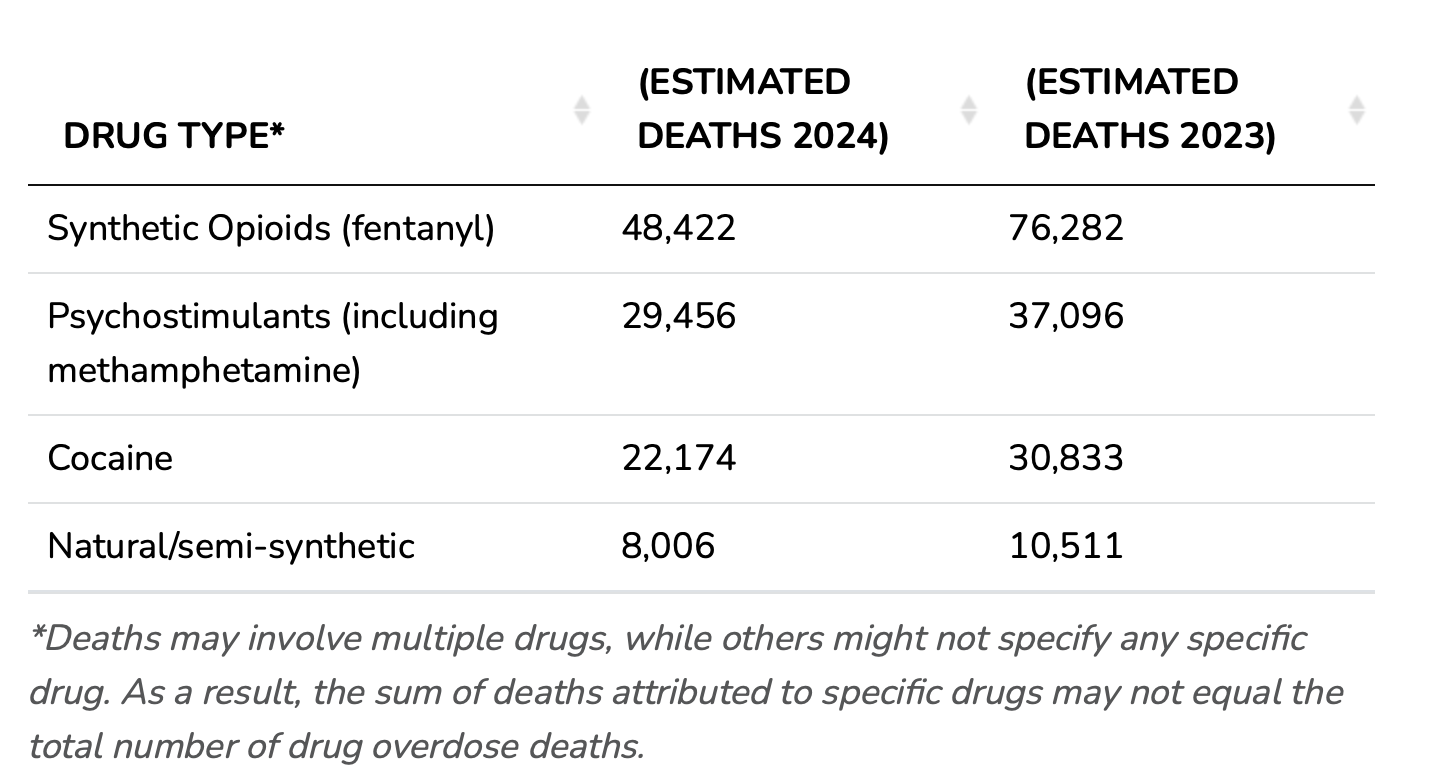
So the drugs that are actually killing people aren’t the plants you can buy in a dispensary. They’re the artificial chemicals created by Big Pharma.
Yet perhaps videos mocking us dumb stoners will do better sales for Boll and Branch sheets salesmen?
Remember, that’s Boll and Branch. BOLLANDBRANCH.com/Shapiro. Use code Shapiro to unlock 15% off. Again, that’s bollandbranch.com/shapiro to get the special deal!
During prohibition in the 1920s they had this phenomenon of poisoned alcohol too. Homebrewers would try and make their own alcohol illegally and sometimes they would end up poisoning people. The government even got in on the action of poisoning alcohol.
How could Ben “Boy Genius” Shapiro not think about something this obvious?
How could Ben still be so out of date on the actual science of how people are using marijuana today?
Is he really this dumb or just pretending to be this dumb in order to entertain dumb people and sell them dumb products?
On July 20, UK-based cannabis entrepreneur Niels Bischoff released a thoughtful video featuring choice excerpts from an interview conducted by podcaster Andrew Huberman with Dr. Matt Hill, a professor of cell biology and anatomy at the Hotchkiss Brain Institute at the University of Calgary who has developed scientific expertise in cannabis.
Bischoff selected five myths to debunk and while they’re all worth considering, the first two are the ones most relevant for undestanding the errors with Ben’s claims. As with the podcast transcript above, I’ll present it with a few comments.
And here is the full interview Huberman conducted from July 2024 — all of this information has been widely available for a long time and Ben could have certainly found it himself — if you’d like to see the comments in their context and Hill’s broader analysis:
The first point addresses the concern about the higher potency of cannabis today:

Hill: “You know, cannabis from the ‘70s was like, I don’t know, 5% THC, let’s say. It was pretty low. Uh, and nowadays, cannabis is a lot of the commercial stuff is between 20 and 30. 20 to 30% concentration as opposed to, you know, 5% concentration. It’s significant.
People titrate cannabis pretty well, like at least people who’ve used it a couple times and understand this. When Kenton and Angela and Cinnamon started studying this in the people and taking blood despite the fact that these people are now using cannabis that’s 20 to 30% their blood levels are the same. So they’re still coming in around 100 nanograms per mill because people are really good at self-titrating.
A lot of people assume that weed must be like other drugs and that one must have to increase what they’re taking to keep getting the same high. That isn’t the case at all. Getting weed that is strong does not mean you get addicted to that stronger level, rather it means that you don’t have to smoke as much of it. Smoking more than one needs does not making one feel better. The marijuana itself rewards moderation and limits the amount of intake to how much the body can actually take in through smoking.
And further, the proper dosage for people varies so much. Weed that may be too strong for one person is too weak for another person.
Now where things fall apart is with the concentrates. Cannabis itself realistically from the botanist that I’ve talked to, you can’t really grow a plant that’s going to exceed more than 25 to 30% THC just by sheer biology.
Concentrates can go up to like, 90, 98%.
Those are incredibly challenging to titrate. The sheer volume of THC that hits the system even from a single hit is so overwhelming. And so when the Colorado group looked at those, their blood levels were closer to 200 300 nanograms per mill.”
I had no idea there were biological limits to how high the THC could get in a plant. It certainly makes sense that there would be.
However, where biology ends, human mistakes can begin.
As I noted in “The 10 Biggest Mistakes People Make When They Start Smoking Weed,” I discourage the use of THC vapes and concentrates. These processing techniques simply transform marijuana into a different drug. The focus on THC in these processes strips away the other key components in marijuana. It’s not just the THC which is the key chemical. Individual strains are each going to have individual mixes which produce a range of effects when in combination.
And I come to this position after many years of use and experimenting with the vapes and concenrates. I’ve tried a number of different brands for many years. And many of them are certainly fine and people could use them responsibly. However, they’re just not as good as the real thing, and as Hill notes, they’re more difficult to dose properly.
This understanding of how cannabis transforms depending on how one consumes it is also key for grasping some of the “think of the children!” fearmongering today.

Hill: “The majority at least of kids ending up in the ER is almost all based on edibles. oral consumption, you know, you’re looking at a minimum of 30 to 45 minutes for onset of intoxication. For some people, up to 90 minutes after they’ve eaten. Now, this is also the reason why the majority of adverse events that happen with cannabis happen with edibles because people don’t understand this. And so, they eat a cookie or a gummy, they wait half an hour like, “I’m not feeling anything. I clearly didn’t take enough.” And then they’ll double their dose. And then, like 15 minutes later, it starts hitting them. And then, like, once it fully kicks in, it’s just like a steamroller.
And what happens there is you get a metabolite called 11 hydroxy THC which seems to be a bit more potent than THC is. And that’s one of the reasons why it takes, you know, 45 to 90 minutes to kick in. But then the high itself also lasts like 6 hours, four to six, sometimes eight depending on the person what they’ve eaten.”
Just as the higher dosages in concentrates are harder to regulate, so too the edibles will also be more difficult to control, especially for novice users still figuring out dosages.
However, this is not as much the case as a decade ago. Back when medicinal marijuana was still the state of the law in California — we used to have to go pay a doctor each year to give us our referral card renewal — there was much less development in edibles. It was harder to know what you were getting and how much was in any given product. Finding a clear dosed product like those early Yak Capsules was revelatory.
Much has changed in the years since and now there are many edibles where it’s easy to get a low and precise dose like what my ex and I discovered for our “Disney Land Sabbaths.” Often now they can come in a chocolate bar divided into squares. So it does not take long to figure out the effects of a quarter, half, or full square. People can experiment and learn what the right amount would be for them.
The Ben Shapiro who used to be my friend would talk about the 50 states being laboratories of democracy, and he’d advocate the conventional view of individual states being able to experiment with polices and pass their own laws.
He understood the obvious: that often some states experimenting would go too far or pass laws that had negative consequenes, while others would succeed and then their success could be replicated elsewhere.
Just as states make misakes with experimenting, so do people. And that’s OK. We can learn from our mistakes.
This is the nature of America: Freedom is our defining ethos and value.
And while Ben may have lost the plot on this over the years, someone else who has also parted ways with him never did and he’s speaking out regularly now.
Here’s an exercise you can do yourself.
Click here to open up Ben’s YouTube page in another window.
Click here to open up his former partner Jeremy Boreing’s YouTube page in another window for the new show he has launched a year after leaving the Daily Wire.
Compare and contrast their shows and what will you find?
When they reference the same figure in a video how do they do so differently?
The video above published on Tuesday from Jeremy is titled “Hasan Piker and Candace Owens Are Selling You Third-World Thinking” and features a complex, informative 40-minute monologue from Jeremy.
In comparison, here’s the 8-minute video which Ben published on Monday: “Hasan Piker's Communist Lifestyle EXPOSED By His Own Family”:
But don’t just stop there and compare topic-to-topic. What else do you find when going through their respective shows?
Almost every single one of Ben’s videos is just him monologuing about a topic that is seemingly trendy or has a potential of “going viral.” Here are a few items from the last several days:
But Jeremy has taken a different approach.
His solo monologues are only one part of the program. He also features livestream discussions he hosts with two to three other people joining him in his living room:
Choice clips from these livestreams then get featured on the YouTube channel.
Jeremy will also do long, in-depth interviews.
Last month I picked apart a key passage from his interview with Rod Dreher:

Here’s a two-and-a-half-hour interview he did with former neo-Nazi Lucas Gage:
So while Ben chooses to put out predictable little opinon commentaries to sell sheets, Jeremy is doing actual journalism and hosting serious group discussions with legitimate intellectuals.
But really, I have to be fair, Ben does sometimes do hard-hitting interviews for his show. Just today when I was reviewing this essay and making final changes to it, I discovered this:
So while Jeremy is interviewing an influential ex-neo-Nazi about rising antisemitism, Ben is talking with his employee, the millennial podcaster Lynden Blake who now hosts the Daily Wire’s “That’s So Criminal!” show, so she can “explain the great appeal of sororities and how these students could be setting themselves up for success.”
Everyone can now simply see with their own eyes.
It turns out that Jeremy is going to have to play the Buckley role now instead of Ben. He was always the one with the talent anyway. Want to know why the Daily Wire succeeed like it did? It wasn’t because of Ben’s fast-talking. It was because of Jeremy’s creativity, serious entrepreneurial skills, and decent character. He’s the Golden Goose.
What you see with Jeremy is what you get in real life. He’s not playing a character for more than two hours when he’s hosting a group in his living room or interviewing someone for an extended period of time. How he talks with them is how he talks with people in real life. He’s not putting on any airs. Even his monologues are just him, not some fictional version he has crafted and practiced for years. The show has authenticity and sincerity because Jeremy himself is authentic and sincere.
But Ben is not. Just sitting in front of a computer alone one can perform like a comedian on a stage.
The “Ben Shapiro” you see on the podcast is Ben playing a character, much like how David Horowitz just played a character. The Jeremy Boreing on his show is indistinguishable from the man himself. There’s no question that Jeremy is giving his authentic views.
Ben has a law degree from Harvard. One of his law professors was Alan Dershowitz.
And he’s going to put out a video saying some shit as dumb as that Prohibition was a good idea and we should do that again but with weed?
As though something like that could even happen in an age in which the Republican president just rescheduld weed to Schedule III because even 50% of Republicans support legalization?
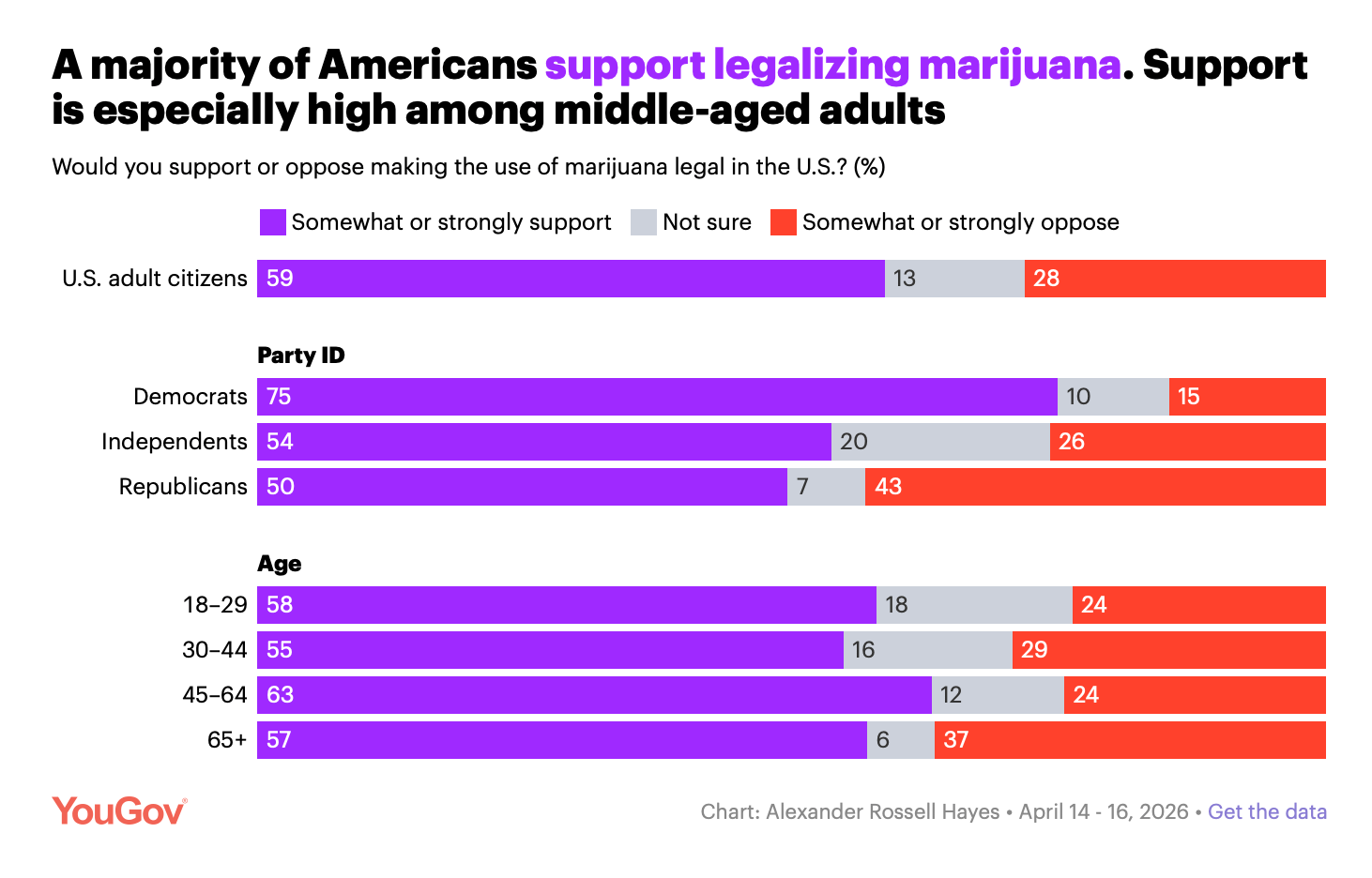
I call bullshit.
Ben, you’re not just selling sheets, you’re selling bullshit.
At this point it’s so obvious.
You should be embarrassed and ashamed of yourself.
This is part of an ongoing series of in-depth essays profiling notable bullshit salesmen. Here is the previous installment exposing an influential New Age author:

And one last time, let’s remember, that’s Boll & Branch!
BOLLANDBRANCH.com/Shapiro. Use code Shapiro to unlock 15% off. Again, that’s bollandbranch.com/shapiro to get the special deal!
Sort of makes sense that Ben would make so much money helping people fall asleep, doesn’t it? Just dreaming his life away…
“Your higher power may be God or Jesus Christ / It doesn’t really matter much to me /
Without each other’s help there ain’t no hope for us / I’m living in a dream of fantasy, oh, yeah, yeah, yeah / If only we could all just find serenity / It would be nice if we could live as one When will all this anger, hate and bigotry be gone?” — Ozzy Osbourne