
What Happens After You Die
This is not an account of beliefs, but a report of experiences. By all means, doubt. You'd have to be crazy not to apply some skepticism to this Substack spiel.

I have chosen not to publish yet about the assassination of Charlie Kirk, the Christian Nationalist podcaster and—in my professional estimation—the most significant and influential right-wing, millennial, infotainment-activist voice.
While I have written quite a bit about the subject over the last few days, none of it has yet felt worthy of publication. What I have to say requires more time to cook, but before it goes into the oven, I still need the main ingredients of solid confirmation and absolute clarity about Kirk's murderer's motives.
So look elsewhere right now for your "hot take" on this subject. You shouldn’t need to wander five steps before tripping over one and bashing your head on another.
This was an act so significant and monumental that I'm still processing it. And no, Kirk was not one of the people I chose to connect with during my 15 years operating in the right-wing media and nonprofit spaces. However, he's more than close enough via “Six Degrees of Kevin Bacon” that I'm still very emotionally rattled and upset.
For me, it's sort of like a co-worker in another department of my employer was murdered, or as if it happened to a friend of a friend—which is, in fact, the case. The waves of trauma are much more blunted for me than for Kirk's friends, family, and his immediate colleagues at Turning Point USA, but they're still reaching me, and with more strength than I expected when Kirk’s assassination was first reported on Wednesday and in the days since.
So let's set aside Mr. Charlie Kirk for a moment, along with the ongoing mystery of his alleged murderer, Tyler Robinson—for today, at least. (And yes, the journalist in me is so trained at this point that every criminal receives the "alleged" in front of them until they're convicted in a court of law. Remember that: Everyone is presumed innocent until proven guilty in a court of law.)
Instead, let's talk today of much cheerier matters than murder, ideological extremism, and the sewers of social media.
Here's what happens to you after you die!
And I write this informed not by my "religious beliefs," but by direct experience. Based on my variety of mystical, occult, and outright supernatural experiences over the last 20 years (and the last five in particular), this seems to be how it goes.
I'll also note that I’m not presenting this in an effort to "persuade" or "convert" you. It doesn't really matter to me what you believe; likewise, I do not care which combination of theology and ideology you choose to embrace right now. I can hand you the tools to "persuade" or "convert" yourself, but it would still be up to you to dive into the deep end of the pool and then swim down there to verify what I—and mystics from east to west, for 5,000 years or thereabouts—have discovered.
But let's back up for a minute. Apart from any religious beliefs, why do I believe anything happens when we die? We are made of carbon and water; the soul has never been scientifically or medically identified. Might we not simply shut off, like lamps, and our bodies go back to the earth?
Though some find this idea comforting, that's not what seems to happen. As I've written before and will write on from time to time, I am what is known as a "psychopomp," as is my wife: In plain speech, we’re mediums who help spirits cross over to Heaven.
This is not something either of us has chosen. It's not an easy job, the pay is crap, and you're always on call. We do what we can to insulate ourselves, as this work is almost always unpleasant.
Then, too, there's the unfortunate fact that, if or when we attempt to discuss the subject frankly and honestly, a lot of people get upset or uncomfortable. Which is understandable! This is still one of the huge remaining taboos in Western culture. (Talk about these themes with followers of Eastern religions, and they hit differently, such concepts being both ancient and baked into the religious practice.)
So if it feels better, then go ahead and just classify this as another of my satire-presented-as-reality creative writing pieces. That's fine. I like to give people that off-ramp of plausible deniability.
What is fact, however, is that the role of the psychopomp appears across cultures and through all of human history. The psychopomp, or specific type of medium, does the work of guiding “lost souls” from the realm of the living to the afterlife.
In a more straightforward description, this involves “ghosts”—as in Casper the Friendly, or those seen by Ebenezer Scrooge in “A Christmas Carol”—coming to us and asking for help, with almost none of them realizing that they're dead.
Yes: “The Sixth Sense” (which is not a film I've ever really liked that much) is fairly accurate in depicting how it goes. Children like the protagonist in that film are especially vulnerable to spirits because of how their brains are developing—they don't have the cultural conditioning against the taboo of acknowledging the existence of spiritual entities.
As a metaphor for how this works, try right now to look at your nose. You can see one side of it with each eye when you're looking for it, but when you're not, your brain edits it out of your field of vision: It's not information your brain thinks you need.
These experiences—which have become so regular over the years as to be mundane and annoying now—have influenced my cosmology, but so have other experiences with spiritual entities both positive and malign.
These experiences seem to me to have largely originated in brain injuries from physical violence, and also internal chemical change from traumatic, afraid-you're-going-to-die-and-cannot-escape experiences. Although Sally has seen confused ghosts since she was a small child, from my research, it seems that injuries or chemical changes to different parts of the brain will induce different kinds of spiritual experiences when sustained later in life.
It's as if being hit in the head in one part of the brain tunes you in to the spiritual TV channel where you get to see and talk to angels. But someone else, hit in another part of the head, might be able to end up feeling when demonic spirits and ghosts are close. Another person might end up being able to sense "nature spirits" associated with the earth. I’ve talked to one guy who says that he sees certain spirits show up at different seasons. Or perhaps someone else would be able to tune in to gain visions of the future or the past, to be able to prophesy what is to come, since time doesn't really exist—it's just something that our brains have evolved in order to enable our survival.
(Editor’s Note: Time doesn't exist, my ass. Explain these gray roots I’ve got, then. -SSS)
Anyway, that's my hypothesis right now for why some of us gain this very unpleasant ability to perceive different forms of spiritual creatures, which is often more a burden than a gift, honestly.
So putting the pieces together, through Sally's and my direct experiences, this seems to be what happens when a person dies:
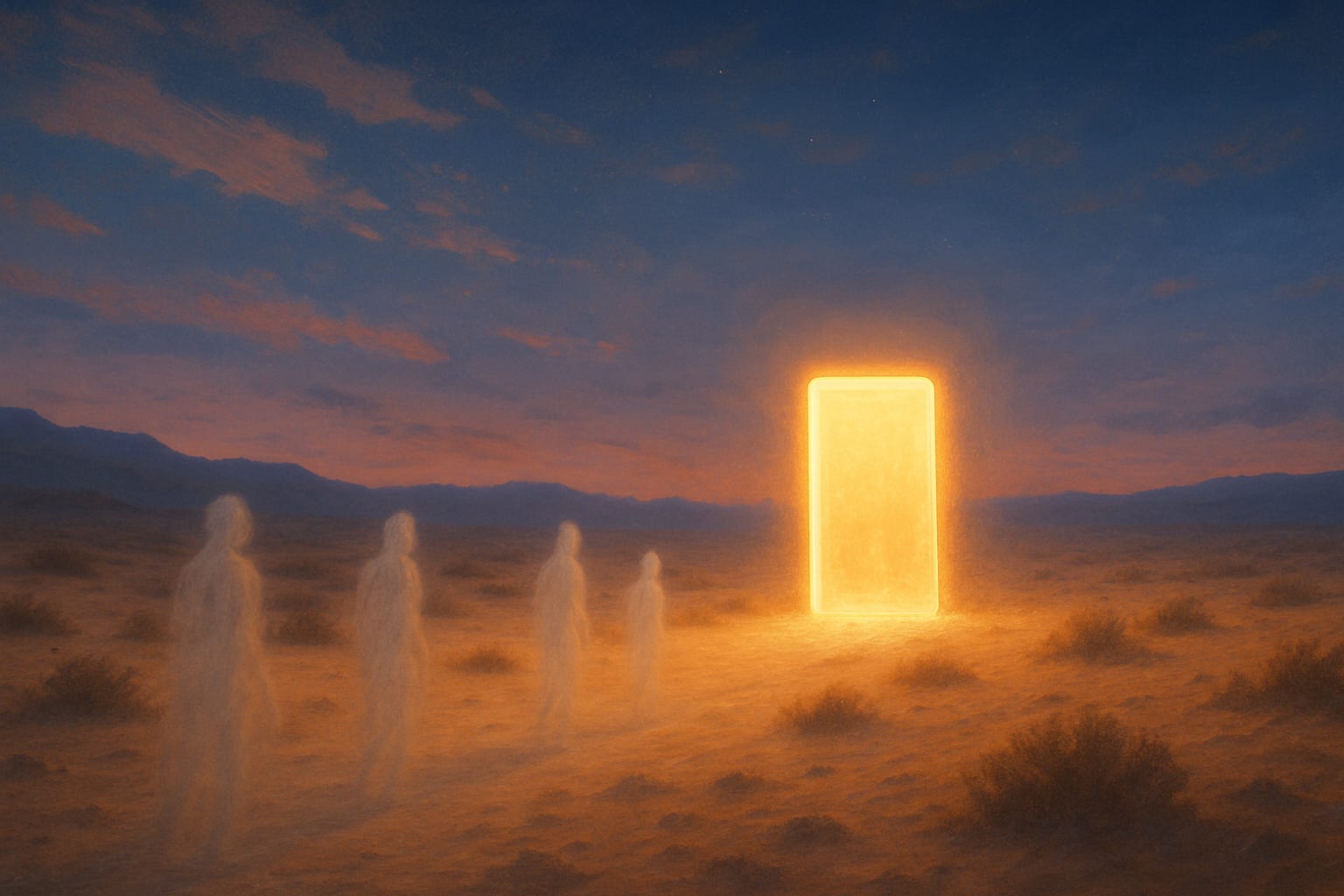
When someone dies, their soul leaves their body and stays on Earth for a time which could vary from a few minutes to months or years, and even, in rare cases, for as long as many centuries, even millennia, from what I can tell.
Becoming a "ghost" after dying is the normal, status quo experience that happens to everyone when they die. It's then just a matter of time before that soul realizes that they can cross over into Heaven, where they can reunify with God if they are ready to do so, or to be reincarnated for another life, if they prefer to learn more.
So if a person expects to go to Heaven when they die, they will, and probably quite quickly, at that. If not, it will take longer—and surprise: Transitioning to Heaven has nothing to do with whether you were a “good" person:
In choosing to reincarnate, souls work with God to agree on and plan what their next life is going to be like—who they'll be and what they will accomplish—beforehand.
I posit that this is why people are so stuck between wondering if free will or fate is the right description of our existence, when really, it's a paradoxical mix of both: Yes, your life is “fated” to turn out some way, but you chose what it would be. And you still have the freedom to choose between Habit and In-N-Out for burgers tonight, though you should pick Habit.
This realization about the accessibility of Heaven certainly leads to the understandable question: Well, if Heaven exists, then does hell?
The short answer? Sort of.
The longer answer is that a soul being stuck here on earth for a long period of time, separated from God, could be understood in some cases to be like hell. And it certainly could involve "demons" who "chew" on or “torture” that soul. When demons try to persuade someone to murder or commit suicide, they’re doing that so the soul can be released from a body so they can chew on it more fully to drain the life force.
Likewise, the metaphor of "purgatory" could also be accurate to describe the existence of ghosts wandering the earth, as generally they are not "ready" yet to cross over, for all sorts of reasons, mostly a combination of not knowing that God and Heaven exist, knowing but not believing they deserve to go there, or having some "unfinished business" to resolve before they can cross over, often involving people they have hurt during their life. This phase, too, of being a ghost, seems to be part of the life journey which souls agree to walk.
I understand that in a sense this may sound like bad news—that the world is filled with ghostly dead souls who have not yet moved on to heaven, many tormented by malevolent entities you can label “demons” if you choose—but it's actually a good thing. Because in the end, all the souls return back to God. Everyone and everything reunites in the end with the Absolute, the Creator, That Nameless Transcendence from Which We All Emerged.
And how to achieve that reunion with God sooner? Well, you don't have to die to be closer to God. Take your pick of the mystical practices across east to west, starting with something as basic as meditation. Transcendence is always just a few breaths, a few ways to calm the mind, a few steps into the ocean of pure consciousness that is our Creator.
Don't take my word about this ghosts, reincarnation, and psychopomps gibberish mumbo-jumbo. Start expanding your awareness and consciousness and these spiritual realities will begin to reveal themselves. And the process might accelerate if you get traumatized, have a near-death experience, or get hit in the head in the right spot.
Now, regarding what to make of the legacy Kirk leaves behind, the historical significance of his murder, and its political implications: Those discussions necessitate greater thought and information first, before the presentation of tentative conclusions for your consideration.
But for now, please take comfort, don't be afraid. The all-loving God is there and He welcomes back all of His children when they are ready to return to Him.
Do not be afraid.
Do not be afraid
Do not be afraid.
Do not be afraid.
Do not be afraid.
Do not be afraid.
Do not be afraid.
For previous essays exploring these ghostly themes, see these:




Fascinating. I look forward to learning more about your vision.
Thank you for this piece. I’m looking forward to reading more about this side of you two.